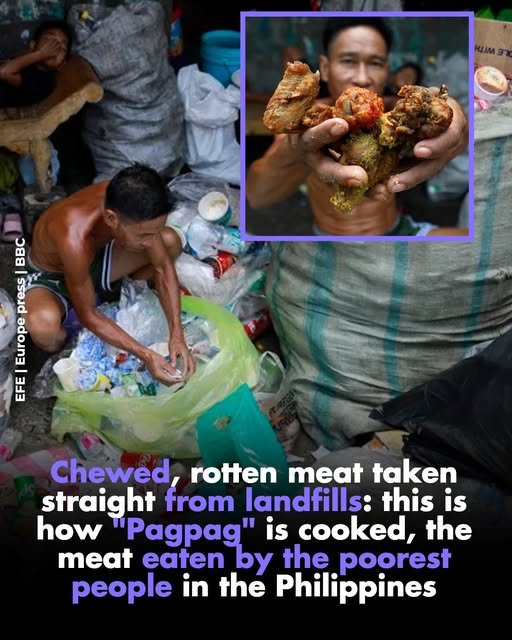
There are realities so hard to stomach that they seem pulled from a dystopian horror movie. Yet in the slums of Manila, the capital of the Philippines, horror is served hot and on a plastic plate.
Its name is Pagpag, a Tagalog word that literally means “to shake off dust or dirt”, and which today gives its name to a clandestine, morbid, and deadly food industry that feeds families living in the most extreme poverty.
While the world wastes tons of food every day, thousands of people in the suburbs of Tondo survive on a menu made up exclusively of other people’s chewed leftovers.
The Pagpag production cycle begins late at night, when official garbage collectors and informal workers go to the dumpsters of major fast-food chains.
The harvesting of waste: Garbage bags stuffed with leftover chicken bones, scraps of meat, and half-bitten hamburgers are pulled out and piled up on the ground at the landfills.
Manual sorting: Men, women, and children rummage through used diapers, plastics, and decomposing organic waste to rescue any piece of meat that still has some tissue clinging to the bone.
Once collected, the meat enters a phase of makeshift “sanitization” that defies any basic medical standard. The pieces of chicken are washed thoroughly in buckets of water to remove ash, dirt, flies, and even rat poison commonly found in dumps.
On the other hand, some internet users analyze the problem from a purely biological point of view: “The resilience that these people’s immune systems have developed is impressive. Any tourist would die within two hours of trying a bite of that”.
Pagpag is the starkest reflection of a broken system, where the line between one consumer’s waste and a child’s dinner has been completely erased.