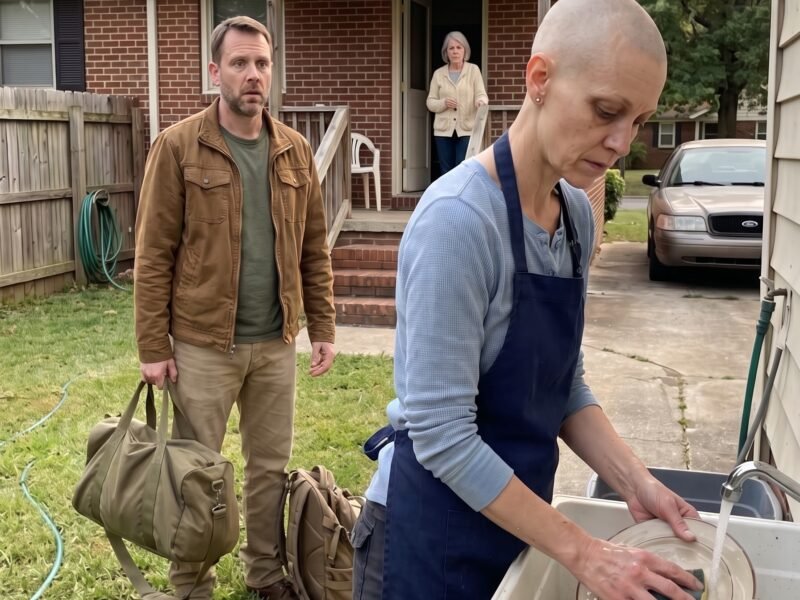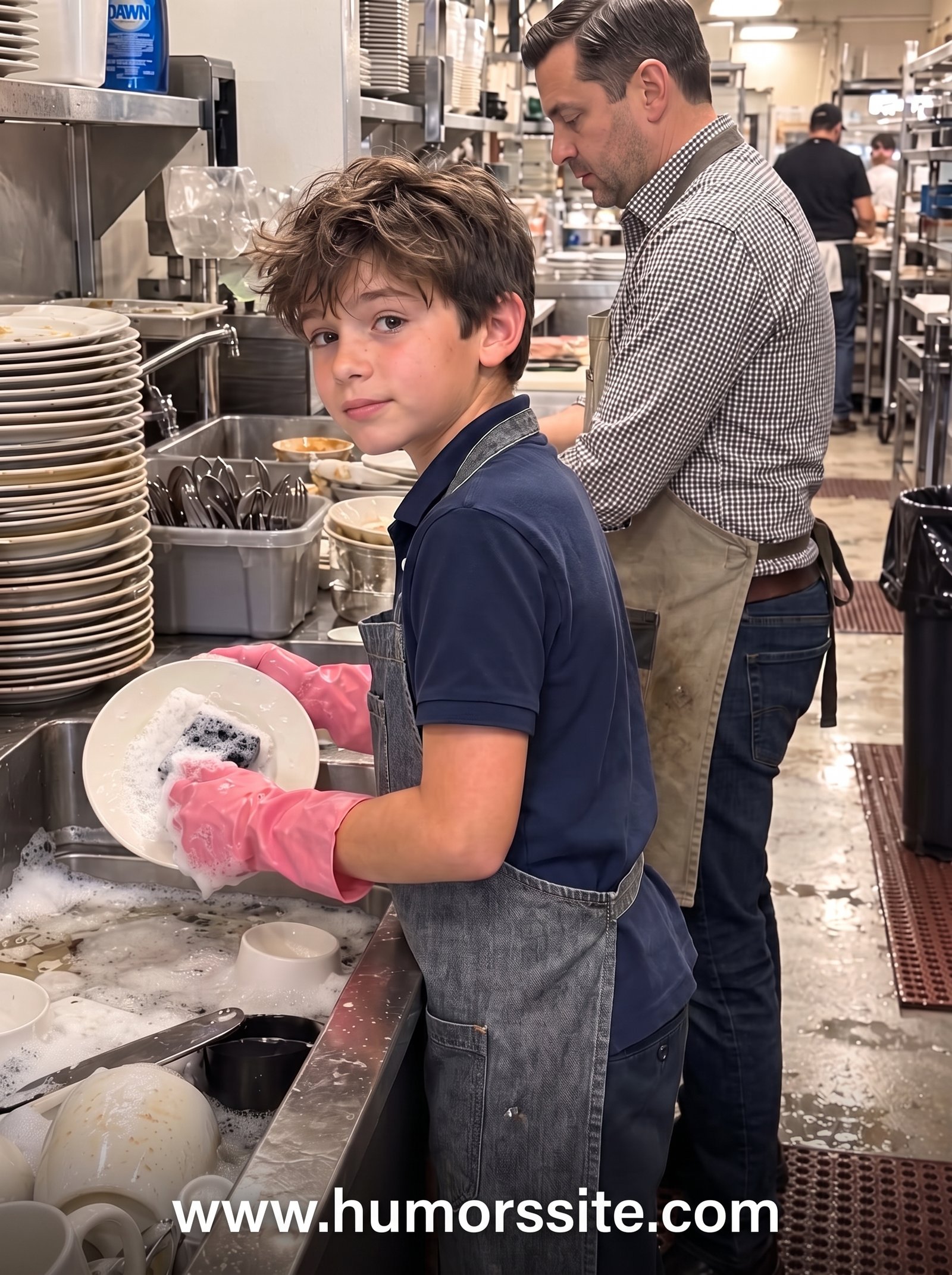
My 13-year-old son took a dishwashing job without telling me, and I couldn’t understand why. Then his boss called and asked, “Do you have any idea what he does with every paycheck?! Everything he’s told you about that money is a lie.”
My thirteen-year-old son, Evan, had been obsessed with the same bicycle for months. So when he told me he had found a Saturday job washing dishes at a neighborhood diner, I was not surprised.
“I want to pay for it myself.”
That sounded exactly like Evan. Since his father died three years earlier, he had become determined not to ask me for anything expensive, almost as if needing less from me could somehow make my life easier.
Every Saturday, he left the house wearing old jeans and worn sneakers, then came home smelling like dish soap, french fries, and fryer grease. Whenever I asked how much he had managed to save, he always gave me the same cheerful answer.
“Almost enough.”
At first, I believed him without question, but six months passed and the bicycle still never appeared. That was when small details began to emerge that did not quite match the story Evan had been telling me.
One night, I walked past his bedroom and saw him sitting on the floor counting a thick stack of cash. The moment he noticed me, he quickly shoved the money into his backpack.
“What are you doing?”
“Nothing.”
“Is that the money for your bike?”
He nodded too quickly.
“I’m getting close.”
I chose not to press him because he was thirteen, and I understood that kids his age were allowed to have things they wanted to keep private. I told myself he might be saving for something else, spending money on a girl, or planning a surprise he did not want me to discover.
Then one Saturday, Evan came home almost two hours later than usual. His shoes were caked in mud, one sleeve was torn, and he avoided meeting my eyes when I asked what had happened.
“I fell on the way home.”
“Where’s your paycheck?”
He looked down at the floor.
“I put it somewhere safe.”
Something about that answer stayed with me, but I still tried to explain it away. I kept reminding myself that being worried did not automatically mean something terrible was happening.
A few days later, my phone rang while I was at work. The man on the other end introduced himself as Sal, Evan’s boss at the diner, and the uneasiness in his voice made my stomach tighten immediately.
“Ma’am, I need to talk to you about Evan.”
“Did he do something wrong?”
There was a long pause before Sal finally answered.
“I honestly don’t know how to answer that.”
I gripped the phone more tightly.
“What do you mean?”
Another silence followed before he asked the question that made every strange detail from the previous six months rush back into my mind.
“Do you know what your son does with every paycheck?”
I frowned because I thought I already knew.
“He told me he’s saving for a bike.”
Sal hesitated again.
“You should probably sit down. Everything that boy has told you about that money is a lie.” .
PART 1: THE BIKE THAT NEVER CAME
My thirteen-year-old son, Evan, had been dreaming about the same bicycle for months. Every time we drove past the sporting goods store on Route 9, he would glance toward the window at the matte black frame with orange lettering, yet he never once asked me to buy it for him.
That was simply who Evan had become after losing his father three years earlier. Marcus had died suddenly, leaving me with a ten-year-old boy who seemed to grow up almost overnight.
Evan started noticing things children were not supposed to notice. He saw the bills stacked on the kitchen table, the nights I was too tired to cook, and the months when I quietly moved money from one payment to another just to keep everything running.
Somewhere along the way, he decided that his job was to make my life easier rather than add another burden to it. He stopped asking for expensive gifts, handled chores without reminders, and rarely complained when money was tight.
So when he came to me one evening and announced that he had found a Saturday job washing dishes at a diner on Cherry Street, I was surprised but not shocked. He stood unusually straight while explaining that the owner, a man named Sal, had agreed to pay him cash each week.
“I want to buy the bike myself. I don’t want you paying for it.”
I told him we could find another way, but Evan shook his head.
“No. I want to earn it.”
I agreed on one condition: school came first, and if the job became too much, he had to stop. Evan grinned, hugged me tightly, and promised he could handle it.
Every Saturday after that, he left early wearing old jeans and worn sneakers. He returned in the evening smelling of dish soap and fryer grease, his hands increasingly red from hours in hot water.
Whenever I asked how close he was to affording the bike, he always gave me the same answer.
“Almost there.”
At first, I thought nothing of it. One month became two, and I assumed Evan was being careful with his savings or wanted extra money beyond the exact price.
Then three months passed. Then four. By the fifth month, the bike was still sitting in the store window.
I started doing the math quietly. Evan had told me Sal paid around sixty dollars every Saturday, which meant he should have saved well over a thousand dollars by then, while the bike cost only about six hundred.
I tried not to worry because thirteen-year-old boys were allowed to have secrets. Maybe he had changed his mind, found something else he wanted, or was planning some kind of surprise.
Then one night, I walked past his bedroom and saw him sitting on the floor counting a thick stack of cash. There was far more money than I expected, and the moment Evan noticed me in the doorway, his expression changed from concentration to unmistakable fear.
He gathered the bills quickly and shoved them into his backpack.
“What’s all that money?”
“It’s just the bike money. Sal pays me in small bills, so it looks like more than it is.”
His explanation sounded reasonable, but his voice did not. I stood there for another moment, feeling that something was wrong without knowing exactly what it was.
A few weeks later, Evan came home almost two hours late from work. His shoes were covered in mud, his jacket was torn at the shoulder, and there was a fresh scrape along the side of his face.
He claimed he had slipped near the creek while walking home, but the damage to his clothes looked less like a fall and more like a struggle. When I asked about that week’s paycheck, Evan lowered his eyes and became strangely quiet.
“I put it somewhere safe.”
That night, I lay awake staring at the ceiling. The missing bike, the hidden cash, the torn clothes, and the frightened look on my son’s face no longer felt like separate mysteries.
For the first time, I began wondering whether the Saturday dishwashing job was hiding something much bigger.
And I was terrified of what I might eventually discover.
PART 2: THE PHONE CALL FROM SAL
After Evan came home muddy and scraped, my mind began filling in the blanks with possibilities I hated. I wondered whether older kids were pressuring him, whether someone had gotten him involved in something illegal, or whether the dishwashing job had never been as simple as he claimed.
I decided I would sit him down and demand the truth, no matter how uncomfortable the conversation became. Before I had the chance, however, my phone rang while I was at work two days later.
“Is this Evan’s mother?”
The voice belonged to an older man who introduced himself as Sal, the owner of the diner on Cherry Street. The moment he said Evan’s name, every fear I had been trying to control came rushing back at once.
“Did he do something wrong?”
Sal hesitated for several seconds before answering. When he finally spoke, he sounded less angry than genuinely uncertain about how to explain what had been happening.
“I honestly don’t know how to answer that.”
My stomach tightened.
“What do you mean?”
Another pause followed.
“Do you know what your son does with every paycheck?”
I told him Evan had been saving for a bicycle and that washing dishes was supposed to be how he earned the money himself. Sal released a slow breath before saying the words that immediately made my hands go cold.
“Ma’am, you should sit down. Everything that boy has told you about the money is a lie.”
For a moment, I could barely process what he had said. The missing bike, the cash in Evan’s bedroom, the muddy clothes, and the months of hearing “almost there” suddenly seemed to confirm every terrible suspicion I had tried to dismiss.
“What is he doing with it, Sal? Please, just tell me.”
Before he could answer, shouting erupted somewhere behind him. Through the phone, I suddenly heard Evan’s voice, frightened and much younger than the calm, responsible boy he always tried to be around me.
“Please, Sal! Don’t tell my mom!”
Another man shouted something I could not understand, followed by a loud crash and the sound of dishes striking the floor. I jumped to my feet so quickly that several coworkers turned toward me.
“Evan? What’s happening? Sal, where is my son?”
Sal returned to the phone breathing heavily, as though he had been trying to separate people.
“You need to come down here right now. Your son tried to do it again, and this time things got out of hand.”
The call ended before I could ask what “it” meant.
I left work without my coat and drove toward the diner with every possible nightmare competing inside my head. I wondered whether Evan had been stealing, fighting, or handing money to someone who had manipulated him, and the torn jacket from a few weeks earlier suddenly felt connected to something much darker.
By the time I reached Cherry Street, I had convinced myself that my son might be in serious trouble. I rushed through the diner door expecting police, blood, or evidence that the boy I thought I knew had become involved in something dangerous.
Instead, I found Evan standing in the middle of the restaurant with tears streaming down his face. He was holding a fistful of cash toward a woman sitting in a booth, while Sal stood between them and a broken tray of dishes lay scattered across the floor.
On the table beside the woman were prescription bottles, official-looking papers, and a child’s drawing. Nothing about the scene made sense, but Evan’s face crumpled the moment he saw me.
“Mom, I’m sorry. I didn’t want you to find out.”
I stepped closer, terrified but completely confused.
“Find out what?”
Sal rested a hand gently on Evan’s shoulder and looked at me with tears in his own eyes. His next words changed everything I thought I knew about the past six months.
“Your son hasn’t been doing anything wrong. Every Saturday I pay him sixty dollars, and the second I put that money in his hand, he gives it away.”
PART 3: WHERE EVERY PAYCHECK WENT
For several seconds, I could only stare at Sal because his answer made less sense than every terrible explanation I had imagined on the drive over. Evan had spent six months lying about saving for a bicycle, but the truth was not that he was stealing money or getting involved with the wrong people.
He was giving every paycheck away.
The woman sitting in the booth was named Carla, and she had two young children, a six-year-old boy and a four-year-old girl. Her husband had left, she had lost her job, and she had fallen behind on rent while also struggling to afford medication for her son’s asthma.
Sal had quietly been helping whenever he could by giving the children food and letting the family stay inside the warm diner without expecting them to order much. Evan had noticed them almost immediately because he recognized the same expressions he had seen on my face after Marcus died.
One Saturday, after Sal handed Evan his sixty-dollar paycheck, Evan walked directly to Carla’s booth and placed every dollar on the table.
“This is for your kids.”
Carla tried to refuse, but Evan would not take the money back. The following Saturday, he did the same thing, and then repeated it week after week for almost six months.
Suddenly, every strange detail made sense.
The money I had seen scattered across Evan’s bedroom floor had not been secret savings for himself. He had been counting it carefully to make sure there was enough for Carla’s children, sometimes adding money from his own allowance when her son needed another inhaler.
Then I remembered the night he had come home with mud covering his shoes, a torn jacket, and a scrape across his face. When I asked what had happened that night, Evan wiped his cheeks and finally told me the truth.
“There were some older kids near the creek. They saw me give Carla money once, so they figured I always carried cash.”
The boys had waited for him after work and tried to take that week’s paycheck. Evan ran rather than give it up, slipped while climbing the muddy creek bank, tore his jacket, and managed to escape with the money still in his possession.
“I told you I put it somewhere safe. I did. I gave it to Carla the next week.”
My stomach twisted as I realized how much danger he had hidden from me. He had been chased, frightened, and injured while protecting money that was not even meant for himself, yet he had come home and lied because he knew I would make him stop if I discovered what was happening.
I looked at my thirteen-year-old son standing there with cracked hands from months of dishwashing and tears still running down his face. Pride and fear collided inside me so hard that I could barely speak.
“Why, Evan? Why didn’t you tell me any of this?”
He lowered his eyes before answering. When he finally spoke, six months of secrets seemed to come out with every word.
“Because I knew you’d tell me we couldn’t afford to give money away. And you would’ve been right, Mom.”
He gestured toward Carla and the prescription bottles on the table.
“But they had less than we did.”
Evan told me he still remembered the months after his father died, including the nights he heard me crying when I thought he was asleep. He remembered almost losing our electricity, neighbors bringing us food, and a woman from church quietly paying our heating bill when I had nowhere else to turn.
“People helped us when we were drowning. When I saw Carla and her kids, I knew what that looked like.”
By then, I was crying too.
“I had money I could give them. I wanted to be the person for them that other people were for us.”
Then Evan looked directly at me, and what he said next broke through the last piece of composure I had left.
“Dad would’ve done it.”
PART 4: THE REASON HE KEPT IT SECRET
Evan wiped his face with the sleeve of his torn jacket and tried to explain why Marcus had been on his mind every time he handed Carla his paycheck. He remembered me telling him that his father had always been the kind of man who would help a stranger without waiting to be asked.
“Dad would’ve done it. You always said he’d give someone the coat off his back.”
His voice broke as he looked at me.
“If I can’t have him here anymore, I thought maybe I could at least be like him.”
That was the moment I stopped trying to hold myself together. I crossed the diner, wrapped my arms around my son, and held him tighter than I had since the day we buried his father.
“I’m not angry with you. I’m proud of you, Evan. I have never been more proud of anyone in my life.”
Carla began crying again from the booth, and when she finally joined us, she explained that she had tried repeatedly to refuse Evan’s money. Every Saturday, she told him to keep his paycheck and save for the bicycle he supposedly wanted, but Evan would leave the cash on the table and hurry back to the kitchen before she could return it.
The money had kept her electricity on and helped pay for her son’s asthma medication. On more nights than she could count, it had also meant the difference between her children eating dinner and going to bed hungry.
Sal had known what Evan was doing for months. He admitted that he struggled with whether to contact me because Evan had begged him not to interfere, but the incident with the older boys convinced him that the secret had become too dangerous.
That afternoon had finally forced Sal to make the call. Carla had learned that Evan had been chased over the money and refused to accept another paycheck, while Evan insisted she take it anyway.
Their disagreement became emotional enough that a tray of dishes was accidentally knocked onto the floor. That was the crash I had heard through the phone, and Sal had been trying to calm everyone down when he told me to come immediately.
“In forty years of running this diner, I’ve never seen anything like what your son has done.”
Sal looked at Evan before turning back to me.
“I figured his mother deserved to know what kind of boy she raised.”
His words made me think again about the sentence that had terrified me over the phone. Sal had told me that everything Evan said about the money was a lie, and I had immediately imagined the worst possible version of my son.
The bike had indeed been a lie, but not for the reason I feared. Evan had invented that story because he knew I would try to protect him by telling him to stop giving away money we could barely afford to spare.
Over the following weeks, I realized that Evan should never have been carrying Carla’s entire problem on his thirteen-year-old shoulders. His compassion was extraordinary, but what Carla needed was not a child sacrificing every Saturday paycheck forever.
She needed a way back onto solid ground.
I had spent three difficult years rebuilding my own life after Marcus died, and during that time people had helped me navigate jobs, bills, benefits, and emergencies I did not understand. Now I realized it was my turn to do the same thing for someone else.
I started making phone calls.
Through a friend, I helped Carla find steady work and showed her how to apply for assistance programs she had never known were available. Within a few months, she was current on her rent, and buying her son’s inhaler no longer meant deciding what her children would have to go without.
Carla finally refused to accept another dollar from Evan.
For the first time in six months, my son was allowed to keep his own paycheck.
But knowing Evan, I should have realized that did not mean he was finished helping people.
PART 5: THE BOY ON THE BLACK BIKE
Once Carla was back on her feet, she refused to accept any more money from Evan. Sal gave him a small raise and told him that generosity was admirable, but carrying every problem alone was not.
“Big hearts still need backup. If someone comes after you again, you tell an adult. You don’t have to handle everything yourself.”
Evan promised he would, and for once, I believed he understood that asking for help did not make him weak. What surprised me was that keeping his paycheck did not suddenly turn him into a different child.
A few weeks later, he found a shelter downtown that needed volunteers on Sundays. He started helping there whenever he could and still gave away part of what he earned, only now he did it openly, with me knowing where the money went and sometimes helping him decide how much he could reasonably afford to give.
Watching him taught me something I had not understood before. Evan’s kindness was not a temporary reaction to Carla’s situation; it had become part of how he moved through the world after losing his father.
A couple of months later, Evan’s birthday arrived. I drove to the sporting goods store on Route 9 and bought the matte black bicycle with orange lettering that had started the entire story.
When he saw it waiting for him, he stood completely still. Then his eyes filled with tears.
“Mom, you didn’t have to do this.”
“I know.”
I smiled at him.
“That’s the point. Your dad understood that too. You don’t help someone because you have to. You help because you can.”
Evan hugged me so tightly that for a moment I could almost feel Marcus standing there with us. The bike had once represented something Evan thought he needed to earn entirely by himself, but by then it meant something different to both of us.
He rides that bicycle to the shelter almost every Sunday now. Sometimes I watch him leave with a backpack over his shoulders and think about how terrified I was during those months when I did not know where his money was going.
I had built an entire dark story in my head about my son. I imagined older boys pulling him into trouble, stolen money, dangerous secrets, and every nightmare a widowed mother can create when her child starts acting differently.
I had been wrong about almost everything.
The one thing I understood correctly was that Marcus’s death had changed Evan. What I failed to see was that the loss had not pulled him toward something darker; it had made him more sensitive to other people who were struggling.
He knew what fear looked like because he had watched it on my face after his father died. He knew what it felt like when bills piled up, when strangers quietly helped, and when someone stepped into your life at exactly the moment you thought you were alone.
That experience became a kind of radar in him.
When Evan looked at Carla and her children, he did not see strangers. He recognized the version of us that had once needed help.
I spent years trying to teach my son how to survive losing his father. Without realizing it, he had taken that loss and turned it into compassion.
Sometimes I think about Marcus and hope, wherever he is, he can see the boy we raised. I hope he sees Evan riding that black bicycle across town, using his cracked hands and his own money to help people he could easily ignore.
Evan once told me he was only trying to become like his dad.
The truth is, I think he already has.