It was early spring in Maple Ridge, Ohio — a small town where the mornings still bit with cold and the air smelled faintly of rain. Inside the modest brick building of Maple Ridge Elementary, laughter usually echoed through the hallways. But on that Monday, something happened that would silence the school, break a man’s heart, and teach everyone the cost of assumptions.
Her name was Victoria Harper. She was six years old — small for her age, with chestnut curls and a smile so gentle her teachers often said she seemed “too kind for this world.” Everyone at school loved her. She was polite, eager to learn, and always stayed behind after class to help her teacher, Ms. Clara Jennings, clean up crayons and books.
But behind that quiet sweetness was a child carrying a grief few could imagine.
A CHILD WHO GREW UP TOO SOON
Three years earlier, Victoria’s world had shattered. A tragic bus accident had claimed the lives of her mother and two younger brothers. Her father, Rodrigo Harper, survived — but barely. He walked with a limp now, the result of a crushed leg bone that never healed properly. Since then, he had raised Victoria alone in a small rented house near the edge of town, working nights collecting recyclables to keep food on the table.
People in Maple Ridge pitied him. “Poor man,” they’d say. “Doing his best for that little girl.” But no one ever really knew how hard it was — the endless nights, the unpaid bills, the loneliness. And through it all, Rodrigo clung to one thing: his daughter. She was the last piece of his family that remained
He made her breakfast every morning, braided her hair before school, and read her bedtime stories until she fell asleep. “One day,” she would tell him, “I’ll be a teacher, Daddy. Then you won’t have to work nights anymore.”
He would smile and kiss her forehead. “You already make me proud, sweetheart.”
THE DAY EVERYTHING CHANGED
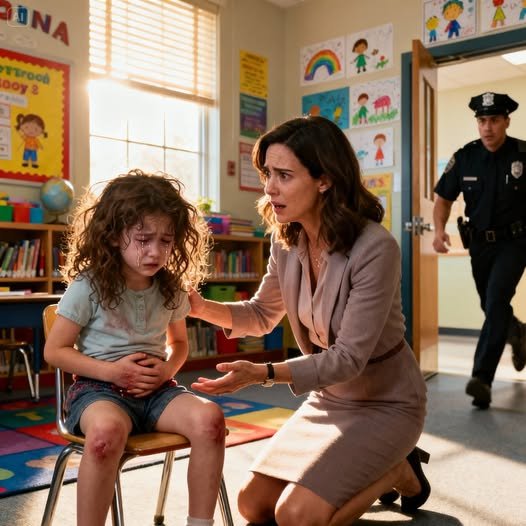
That Monday afternoon, gym class was underway. The children were running relay races, laughter filling the echoing room. Victoria ran slower than usual. Ms. Clara noticed — she looked pale, unsteady, her movements stiff.
“Victoria, are you feeling okay?” the teacher called.
The little girl nodded, forcing a smile. “I’m fine, Miss.”
But moments later, as the whistle blew, Victoria stopped mid-run, clutched her stomach, and fell to her knees with a cry.
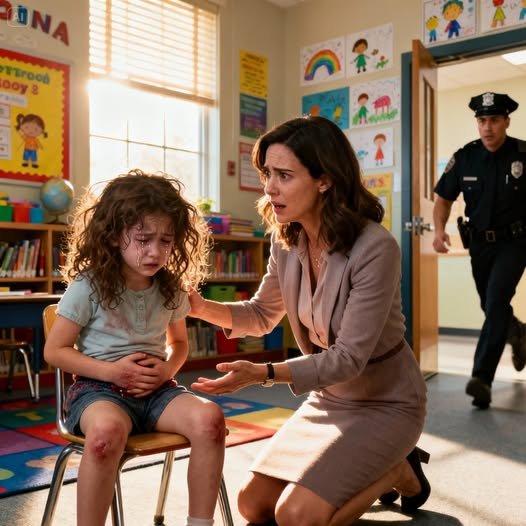
“Victoria!” Ms. Clara rushed over, kneeling beside her. “Sweetheart, what’s wrong?”
Victoria’s face was wet with tears. “It hurts,” she whispered, pointing to her stomach — then lower, near her abdomen.
Ms. Clara tried to stay calm. “Okay, honey, we’ll get you to the nurse.”
But Victoria shook her head. “My dad helps me when it hurts,” she said softly.
Those words hit Ms. Clara like a thunderclap.
She froze, trying to process them. He helps me when it hurts. The phrase replayed over and over in her mind. The tone was innocent, but the implication was chilling.
“Sweetheart,” Ms. Clara said gently, “what do you mean, he helps you?”
Victoria didn’t answer. She just started crying harder.
Ms. Clara’s heart pounded. Her instincts told her something was terribly wrong.
A DECISION MADE IN FEAR
That evening, Ms. Clara stayed late at school. She couldn’t shake what she had heard. When she brought her concern to the principal, Mr. Dalton, he agreed it needed to be reported. The school had strict procedures for possible child abuse — no exceptions.
“You know we have to call Child Protective Services,” he said.
“I know,” Ms. Clara whispered, though part of her stomach twisted with doubt. “But what if I’m wrong?”
Mr. Dalton shook his head. “If there’s even a chance that child’s in danger, we can’t ignore it.”
By nightfall, the report had been filed.

THE NEXT MORNING
Victoria came to school wearing a too-big pink sweater and the same shoes she’d worn all year. She looked tired. When Ms. Clara approached her, she gave a weak smile.
“Are you feeling better today, sweetheart?”
Victoria nodded, but her voice was faint. “A little.”
Halfway through the morning, she cried out again — sharp and sudden. The school nurse was called. An ambulance arrived. And just as paramedics were preparing to take her, a familiar figure limped quickly through the hallway — Rodrigo Harper, breathless and frantic.
“Where’s my daughter?” he asked, eyes wide with panic.
But before he could reach her, two uniformed officers stepped forward, blocking his path.
“Mr. Harper,” one said firmly, “you’re under arrest for suspected child abuse.”
The hallway went silent. Teachers froze.
Rodrigo’s face drained of color. “What?”
They took his hands, cuffed them behind his back.
“I would never hurt her,” he cried, voice breaking. “She’s all I have! Please, listen!”
But no one did.
Victoria screamed as they led him away. “No! Daddy, don’t!”
Ms. Clara held her back, tears filling her own eyes. She wanted to believe she had done the right thing — but watching that little girl reach for her father, something inside her broke.
THE TRUTH BEHIND THE TEARS
Hours later, Victoria lay in a hospital bed, small and pale under white sheets. Doctors examined her carefully.
After a while, one of them came out to speak to the social worker and Ms. Clara, who had come to check on her.
“There are no signs of abuse,” the doctor said. “But she has a serious infection — untreated appendicitis. It’s ruptured.”
Ms. Clara’s knees nearly buckled.
“She said her father helped her when it hurt,” she whispered.
The doctor nodded. “He did. According to the tests, she’s been having pain for days. He was giving her warm compresses and children’s pain medicine to comfort her until he could afford to take her to a clinic. He probably thought it was just stomach flu.”
Ms. Clara felt her chest tighten with guilt. “Oh my God…”
THE REAL STORY
Later that evening, the truth unraveled.
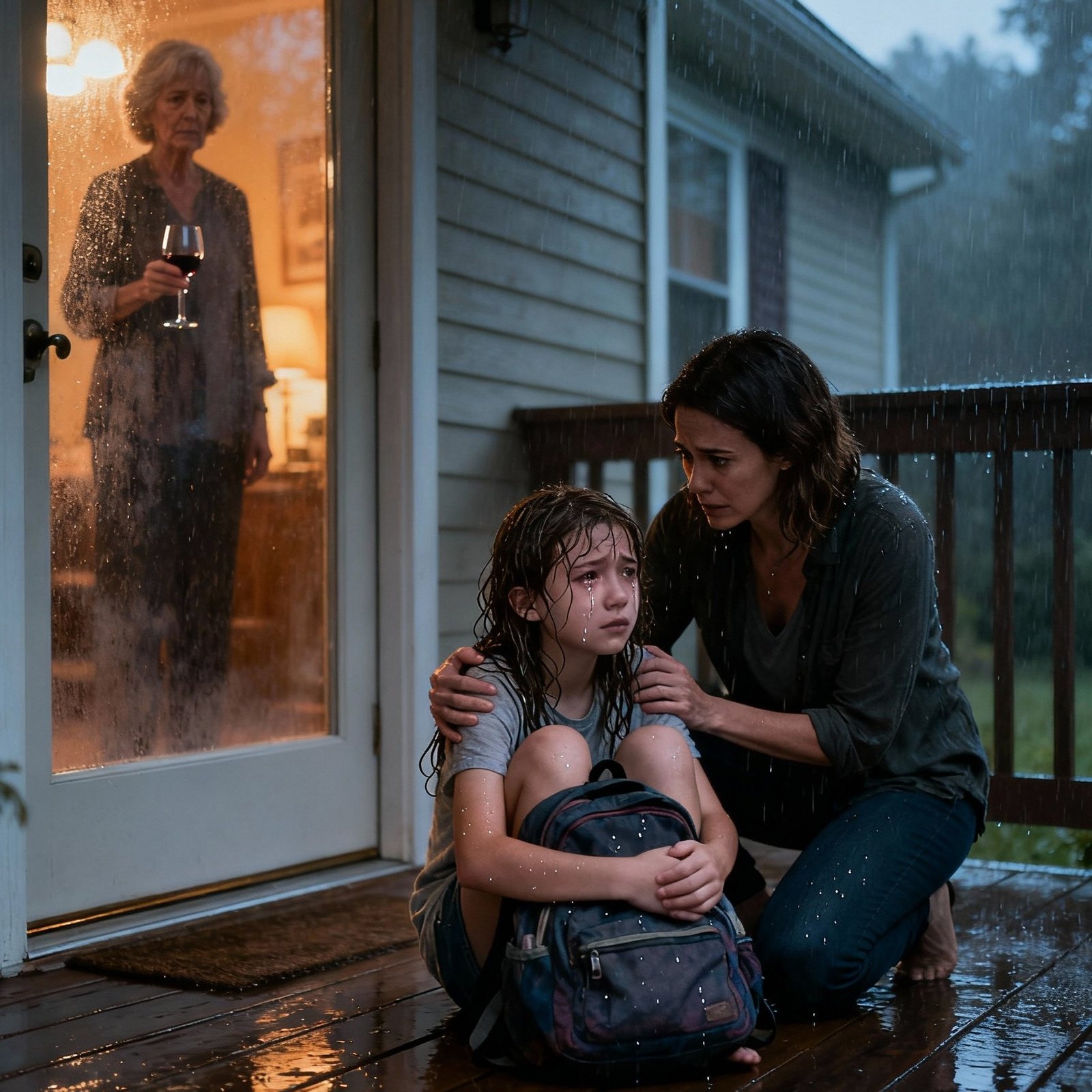
Rodrigo had spent the last of his money on Victoria’s school supplies and rent. His health insurance had lapsed months earlier. When she complained of pain, he tried everything he could — homemade remedies, borrowed heating pads, gentle massages — hoping it would pass. He’d planned to take her to the hospital the very next morning.
When police arrived at his home, they found children’s vitamins, a heating pad, and a small notebook on his kitchen table. Inside were scribbled notes:
“Lily’s fever again. Keep water nearby. Call clinic Monday.”
“Don’t let her see you cry.”
He hadn’t abused her. He had been trying to save her.
THE AFTERMATH
When Ms. Clara heard, she broke down in tears. She rushed to the hospital, trembling as she entered Victoria’s room. The little girl was half-asleep, her small hand clutching a teddy bear.
“Sweetheart,” Ms. Clara whispered, “I’m so sorry.”
Victoria blinked awake. “Where’s Daddy?”
Ms. Clara’s throat tightened. “They’re letting him come see you soon, okay? He loves you very much.”
When Rodrigo was finally released, he limped into the hospital room, tears already spilling down his face.
“Daddy!” Victoria cried, reaching for him.
He hugged her, holding on as if afraid she’d disappear again. “I’m here, baby. I’m here.”
Ms. Clara turned away, her heart shattering. She had done what policy demanded — but it had almost destroyed the only good thing that little girl had left.
A LESSON THAT STAYED FOREVER
In the weeks that followed, Rodrigo and Victoria’s story spread through the town. Some people judged, others apologized, and a few quietly helped pay their hospital bills.
Ms. Clara visited often, bringing flowers and coloring books. When Victoria recovered enough to return to school, she ran to Ms. Clara and hugged her tightly.
“It’s okay,” Victoria whispered. “You were trying to help me too.”
Ms. Clara smiled through her tears. “You’re the bravest girl I’ve ever met.”
From that day on, she vowed to look deeper — to listen, to question, and to never assume the worst when the truth might simply be love.
That spring, Maple Ridge Elementary hung a banner that read: “Compassion First.” It wasn’t just a motto — it was a reminder.
Because behind every story of pain, there’s another story waiting to be heard — one that might break your heart, or mend it.
And in a small hospital room in Ohio, a father and daughter learned that even after the deepest misunderstanding, love — quiet, patient, and unconditional — can still bring two broken hearts back together again.