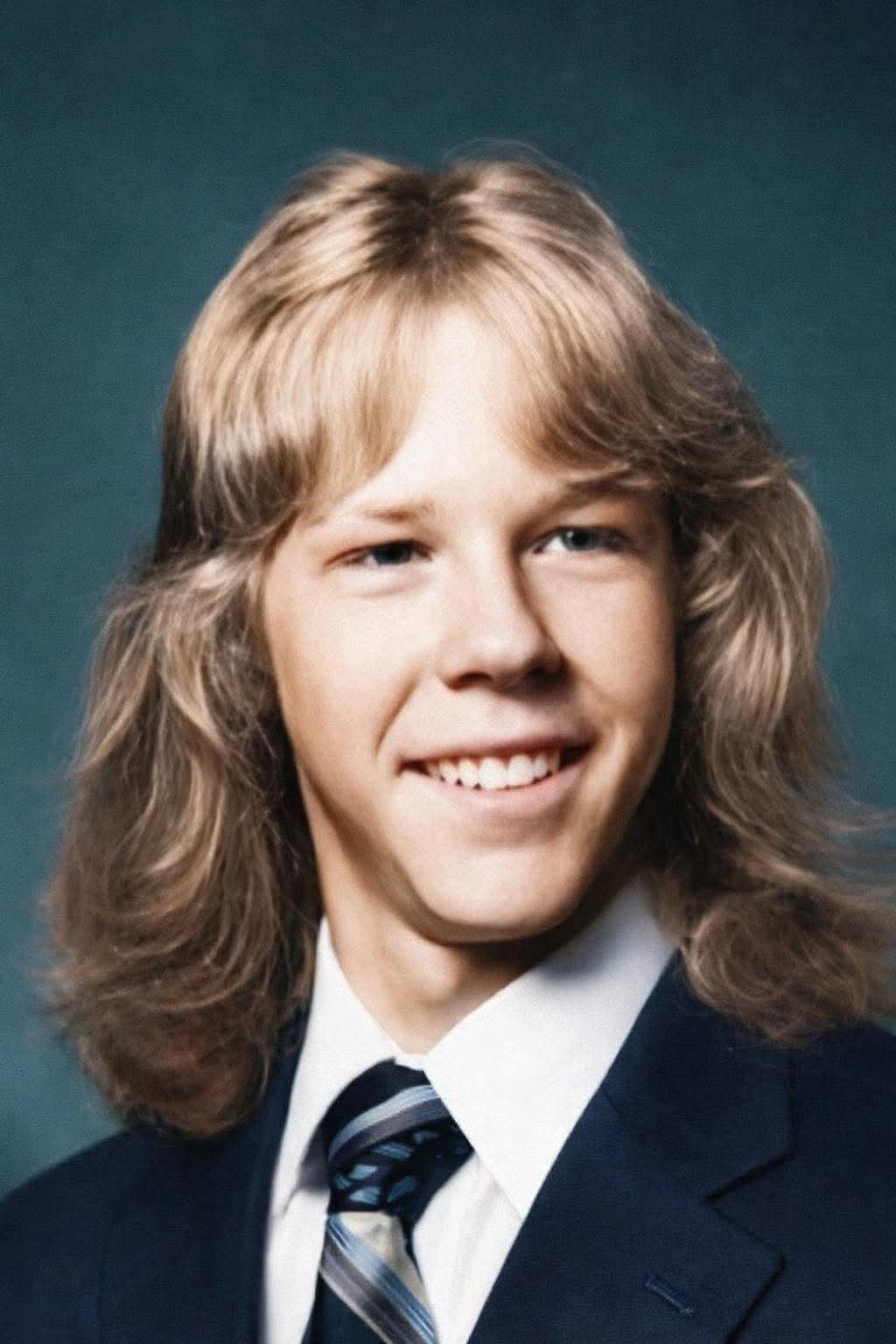
Every legend has an origin forged not in glory, but in fire. For James Hetfield, the flame was lit in a childhood defined by isolation and profound loss. Growing up under the shadow of strict religious doctrines that even forbade medicine, he learned silence early. The world outside seemed a distant rumor. When his mother succumbed to cancer without treatment, the quiet teenage boy was left with a cavern of grief and anger where his family had been. In that echoing space, he found a voice. It wasn’t in words at first, but in the physical rebellion of a guitar. Each chord was a fist against the darkness, every practiced riff a structured scream. The instrument became his confidant and his shield, the one thing that could translate the unspeakable turmoil within him into a powerful, tangible force.
That force would soon find its echo in others. Co-founding Metallica, Hetfield channeled a generation’s disaffection and his own personal storm into a new sonic language. This wasn’t just music; it was catharsis set to a breakneck tempo. As the band’s frontman and primary songwriter, he built anthems from his anguish. Albums like Master of Puppets gave a brutal, beautiful voice to pain, resonating with millions who also felt like outsiders. Onstage, he transformed into an icon of powerful release—a thunderous presence in leather and denim. Yet, even as fame reached a stratospheric peak with the global domination of the “Black Album,” the internal battle raged on. The stadiums were full, but so was the void. The tools that had once been his salvation—music and performance—were now entwined with a desperate attempt to numb the past with relentless touring and substance abuse.
The inevitable reckoning arrived not with a whisper, but a collapse. By the early 2000s, the unyielding pressure of stardom and decades of buried trauma brought Hetfield to a breaking point. Addiction and unchecked anger threatened to destroy everything he had built. The decision to enter rehab and pause Metallica was an act of immense courage, a public admission that the invincible rock god was, in fact, heartbreakingly human. The documentary Some Kind of Monster captured this raw, unvarnished chapter, showing a man stripped bare, learning to navigate fatherhood, partnership, and his own identity without the crutch that had held him up for years. It was a masterclass in humility, a painful public rebuild that required facing the very demons his music had once only roared at.
The man who emerged from that trial is a testament to the possibility of profound change. James Hetfield’s legacy is now dual-sided: one of monumental artistic achievement, and another of hard-won personal redemption. He tours not as a man running from ghosts, but as one who has made a tense peace with them. The gratitude and discipline he now carries on stage speak louder than any pyro display. His story transcends genre, offering a potent lesson: that our deepest wounds can become the source of our greatest strength, if we have the courage to face them. He is a legend not merely for the anthems he wrote, but for the relentless fight to save the man who wrote them.