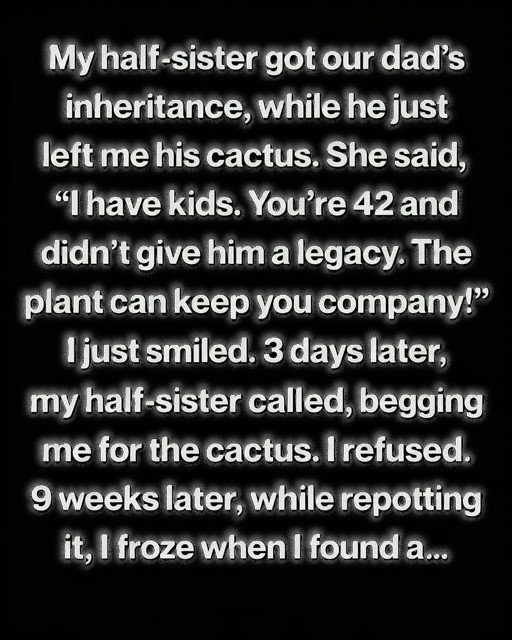
When my father passed away, the sense of loss didn’t come all at once. It settled slowly into everyday moments. At the reading of the will, my half-sister received the house, the savings, and everything of clear financial value. I was given one thing—his old cactus, the same plant that had sat by his window for years. My half-sister laughed, saying she had responsibilities to think about and that I would be fine with something small. I didn’t respond. I simply took the cactus home and placed it on my kitchen table, unsure of what it truly meant.
Over the following days, I began to reflect on why my father had kept that plant for so long. He often described it as a symbol of resilience—something that survives with little attention, endures difficult conditions, and continues to grow. Those words stayed with me. A few days later, my half-sister reached out again, this time more gently, asking if I would consider giving her the cactus. I declined. It wasn’t about fairness or comparison. It had become something personal, something I felt connected to in a quiet way.
As weeks passed, caring for the plant became part of my routine. Then one afternoon, while repotting it, I noticed something unusual near the roots. Carefully tucked into the soil was a small envelope. Inside was a handwritten note from my father. In it, he reflected on his life, acknowledged his imperfections, and expressed pride in the person I had become. He wrote that value isn’t measured by possessions or lists, but by the life we build and the strength we carry forward. He made it clear that the cactus was never meant to be “just a plant.”
In that moment, everything came into focus. What seemed small at first held a meaning far greater than anything else in the will. My father had chosen a simple way to leave behind something lasting and personal. Today, the cactus still sits by my window, quietly growing. It reminds me that the most meaningful legacies are often the ones that don’t appear significant at first—but stay with you in ways that truly matter.