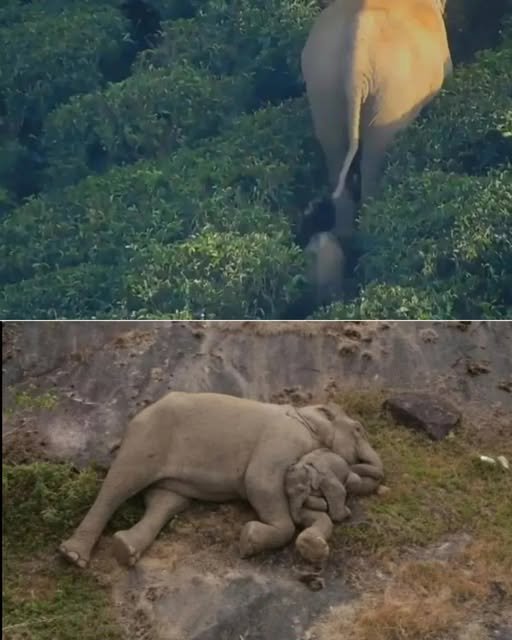
The morning began like any other on the wide, golden plains of the reserve. The elephant herd moved slowly beneath the rising sun — a gentle, rhythmic procession of giants gliding through the grasslands. Their footsteps made soft thuds on the dry earth, and the air was filled with the low rumbles of their voices — a language ancient and deep, carrying through the soil and the wind.
Among them was a young mother and her calf, a curious little elephant who had only recently learned to use his trunk properly. Everything fascinated him — the rustle of the wind in the leaves, the scurrying of birds, the shimmer of a nearby watering hole. Each sound and movement seemed to call his name.
At first, the mother watched him closely, her eyes never leaving his small gray figure as he explored the world with clumsy enthusiasm. But as the herd moved farther through the tall grass, he wandered a little farther. A few meters at first, then a few more.
He didn’t mean to lose her. It happened in a heartbeat.

A butterfly fluttered past, its wings bright in the sunlight. The calf followed, chasing it with squeals of delight. By the time he stopped, the herd was gone. The plains stretched endlessly before him — and silence pressed in from every direction.
The calf froze.
He lifted his trunk and called out, a high, trembling trumpet that carried over the land. Once. Twice. Three times. No answer. Only the whisper of wind in the grass.
The realization hit him — he was alone.
He called again, his cries now desperate, echoing across the wilderness. The little elephant began to pace, his ears flapping nervously, dust rising around his tiny feet. Fear set in. The sun was high, the heat unrelenting. His body shook with exhaustion and panic.
Miles away, the herd had paused beneath a cluster of trees. The mother elephant lifted her head suddenly, her ears twitching. Something deep within her stirred — a mother’s instinct, sharper than sight or sound. She let out a low rumble, long and questioning. No answer came.
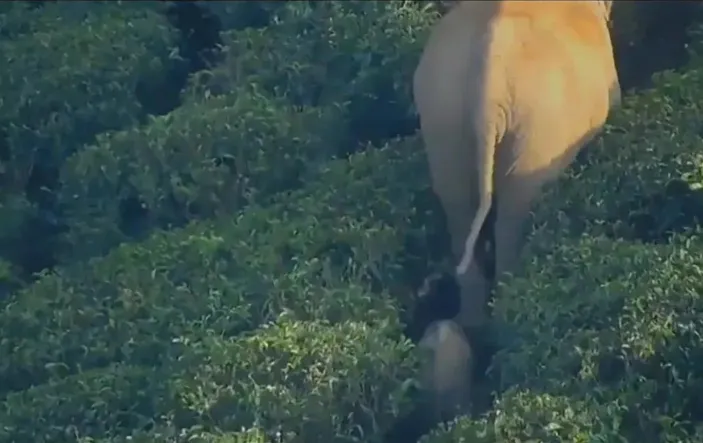
Then she trumpeted, louder this time, her voice echoing through the trees. The others in the herd turned, their eyes alert. Something was wrong.
Her rumbles grew urgent — powerful waves of sound that carried across miles of savanna. The forest fell quiet, as though listening.
That was when the rangers heard it.
They were stationed a few kilometers away, monitoring the herds for safety. The sound that reached them was unlike the usual calls they heard daily. It was sharp, frantic — a cry of loss. Experienced ears recognized it immediately: a mother calling for her missing calf.
Within minutes, a search team was formed.
They loaded supplies into a vehicle — water, ropes, blankets, and tranquilizer kits just in case — and set off across the rough terrain. The radio crackled as updates came in from different points of the reserve. The sun climbed higher, turning the grasslands into a shimmering sea of heat.
Hours passed. Tracks appeared and vanished in the dry soil. The calf’s small footprints led them in uncertain loops, as though he’d been circling, too afraid to go far. Finally, just as dusk began to fall, one of the rangers spotted movement near a dry riverbed.
“There!” someone shouted.
The little one stood beneath a lone acacia tree, trembling. His trunk hung limp, his body covered in dust. His eyes, wide and glistening, darted toward the sound of the approaching vehicle. When the engine cut off, silence fell again — heavy and fragile.
The rangers stepped out slowly, speaking in low voices. They knew how easily fear could turn into panic. One ranger, a woman named Meera, knelt and stretched out her hand, murmuring softly. The calf watched her warily, taking a hesitant step back, then forward again.
“It’s okay, little one,” she whispered. “You’re safe now.”
It took time — long, patient minutes — but eventually, the calf allowed them near. He reached out with his trunk, brushing against Meera’s hand. The tension broke. Relief flooded the team as they gently guided him toward the vehicle.
Before they began the journey back, they washed his dusty skin with cool water. The calf shuddered at first, remembering fear, but then relaxed as the water trickled down his sides, washing away the exhaustion and the terror. His ears flapped slowly, a sign of calm.
“Let’s take you home,” Meera said softly.
The drive back was quiet. The rangers spoke little, each lost in the same thought — whether the mother would still be there, waiting. The sun dipped below the horizon, bathing the world in deep orange light.
As they approached the area where the herd had last been seen, the radio crackled again. “They’re close,” came the report. “The herd’s still near the eastern ridge.”
When the vehicle drew near, the mother elephant stood in the distance, still calling. Her massive frame was silhouetted against the fading light, her trunk raised to the sky.
Then — she froze.
Even from a distance, she sensed it. A familiar scent carried on the wind, faint but unmistakable. Her head lifted higher, ears spread wide.
And then, in a voice that trembled with recognition, she trumpeted.
The calf, still in the vehicle, responded instantly. His small call pierced the air — a cry of hope, of homecoming. The mother let out another trumpet, longer and louder this time. The sound was electric, powerful, filled with joy and disbelief.
The rangers opened the gate. The little elephant hesitated for only a heartbeat before rushing forward, his legs awkward but determined. Dust flew beneath his feet as he charged toward the sound he’d been longing for.
The mother ran too — massive, unstoppable, her feet pounding the earth. The two met in a rush of sound and movement, her trunk sweeping around him, pulling him close, holding him tight. She trembled visibly as she touched him — his head, his back, his face — making sure he was real.
The herd surrounded them, forming a tight circle. Low rumbles rolled through the air, deep and soothing, like a hymn of reunion. The calf pressed against his mother’s chest, listening to her heartbeat, the sound he’d feared he’d never hear again.
The rangers watched from a distance, their eyes wet. In the fading light, the family stood together once more — safe, whole, and home.
It was more than a rescue. It was a reminder — that a mother’s love crosses every boundary: time, distance, and even fear itself.
And as the herd slowly moved back into the forest, the night echoed with their gentle rumbles — the sound of love finding its way home.
Theo’s Breath: A Tiny Warrior’s Journey of Faith, Healing, and Miracles 516
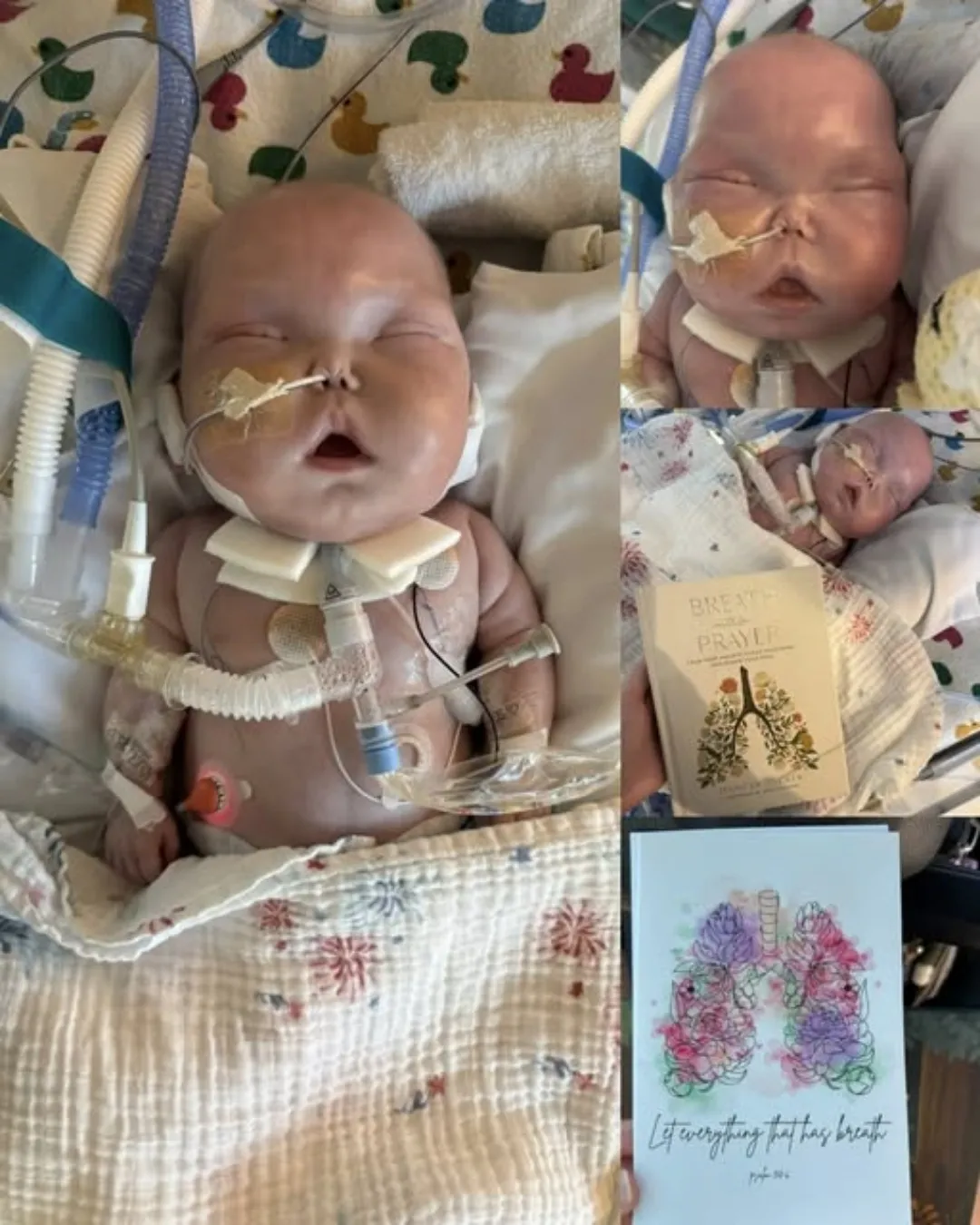
The hospital room hummed softly — the rhythmic beeping of monitors, the quiet whir of machines, the steady, faithful breath of life being measured in numbers and sounds.
In the middle of it all lay Theo — a tiny boy with a warrior’s heart.
October 13th wasn’t just another day. It was a milestone.
Just days earlier, Theo had undergone major surgery — a tracheostomy that changed how he would breathe, heal, and one day, live freely again. For most people, the procedure was clinical, technical. But for Theo’s parents, it was everything — a step toward stability, a fragile bridge between fear and hope.
The days that followed were filled with tension and prayer. The sight of their son — small, still, surrounded by tubes and wires — was something no parent could ever prepare for. But even in his stillness, Theo’s strength radiated.
Every number on the screen, every gentle rise and fall of his chest, was a message: I’m still fighting.
That morning, the medical team gathered for their usual rounds. Monitors flickered, ventilator readings scrolled across the display — and then, a quiet announcement broke the air.
“His ventilator settings can be lowered today.”
It seemed like such a simple sentence. But for Theo’s parents, it meant the world.
Machines could only tell part of the story — the rest was written in courage. Lowering the ventilator meant his tiny lungs were growing stronger. His body was starting to remember how to breathe again, little by little. It was progress, slow but sure — the kind that brings tears you don’t even realize you’re holding back.
Theo’s carbon dioxide levels were being monitored carefully, a sign of how efficiently he was beginning to breathe on his own. And even though he was still medically paralyzed to allow his body to rest and heal, the nurses noticed it — small movements, tiny efforts, little bursts of will.
“He’s trying to breathe on his own,” one of them whispered, her voice soft, filled with awe.
Those words became a prayer.
Every day brought a new rhythm of adjustment — medication levels recalibrated, nutrition refined, swelling around his face and mouth slowly easing. His care team moved with practiced compassion, every action deliberate, every detail noted. But for Theo’s parents, the days blurred together — a cycle of waiting, watching, hoping.
The trach site, though new, looked clean. His body was adapting. And soon — on Wednesday — came the next big step: the first trach change. To anyone else, it might seem like a technical milestone. To his mother, it was proof that healing was happening, one fragile breath at a time.
At night, when the hospital quieted, Theo’s mother would sit by his bed, her hand resting gently against his tiny arm. The machines around him blinked like stars in the dim light. She whispered stories to him — about home, about laughter, about the days that would come when these walls would only be a memory.
She told him about the people praying for him — friends, family, strangers from all over who had learned his name and carried it in their hearts. And in those quiet moments, faith was the only thing strong enough to steady her.
That faith arrived in unexpected ways.
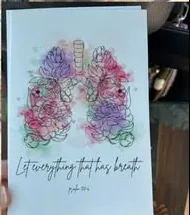
One morning, a nurse walked in holding a small brown package — a gift from a local church. Inside was a handmade blanket, a soft knitted hat, and a card. On the front was written:
“Let everything that has breath praise the Lord.” — Psalm 150:6
Theo’s mother read it over and over.
She looked at her son — his tiny chest rising and falling with the help of the ventilator — and realized how perfectly the words fit.
Because every breath, no matter how assisted, was still a miracle.
The machines didn’t diminish his life. They amplified it — proof that even technology could become a vessel for grace.
Theo’s fight wasn’t loud or dramatic. It was quiet, steady, full of perseverance. His story was written not in grand gestures, but in the small victories that often go unseen — a better oxygen number, a calmer night, a stable hour.
Each of those moments was a triumph.
And through it all, his family stood unwavering — exhausted, frightened, but never hopeless. They learned to measure progress not by how fast things happened, but by how faithfully Theo endured.

There were still hard days — moments when fear crept in, when exhaustion threatened to break them. But each time, something pulled them back. A kind word from a nurse. A steady heartbeat on the monitor. A whispered prayer answered in the smallest, most unexpected way.
Theo had already beaten odds that once seemed impossible. And though the road ahead was still long — filled with more procedures, more milestones, more waiting — he had already proven that miracles don’t always arrive all at once.
Sometimes, they unfold slowly — breath by breath, moment by moment.
And as the machines hummed softly through the night, Theo’s mother closed her eyes, her fingers brushing against his.
“Thank you,” she whispered — not to anyone in particular, but to everything and everyone that had carried them this far.
To the doctors and nurses who cared like family.
To the prayers whispered by strangers.
To the small heartbeat that refused to stop.
Theo lay still, the rise and fall of his chest in perfect rhythm with the machines. Outside, the first light of morning began to filter through the blinds, casting a soft glow over the room.
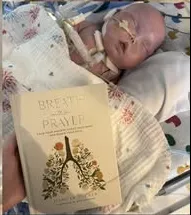
Another day was beginning. Another chance.
And though the world might never know his name, in this quiet hospital room, a miracle was breathing — strong, steady, and alive.
Because some warriors don’t fight with swords or noise.
Some fight with breath.
And every one of Theo’s was a hymn of survival — a living echo of Psalm 150:6:
“Let everything that has breath praise the Lord.”